
Search Williamson County Felony Records
Williamson County felony records are searchable through the county portal and the judicial center in Franklin. The county seat is Franklin, and the court system is built around a broad set of services, including the specialized recovery courts the county operates. That makes Williamson County a strong place to search public court records because the portal and courthouse both support active record work. Start online by name, case number, or hearing date, then move to the clerk office if you need a copy or a deeper file review.
Williamson County Quick Facts
Williamson County Felony Records Portal
Williamson County provides comprehensive online court records access through Williamson County Online Court Records. That portal is the county’s main public route into felony records. The county also keeps a courts site at williamsoncountycourts.org, which is the best local backup when you need office direction, court information, or a county contact path before a courthouse visit. The research says the Justice Center is at 135 4th Avenue South, Franklin, TN 37064, and the Circuit Court Clerk works there.
Williamson County’s court system includes the regular felony and civil court structure plus several specialized recovery courts. The county research names DUI Court, Mental Health Court, Drug Court, and Veteran's Court. That matters because some cases travel through different court tracks and can show up in more than one part of the public record. The portal can show the docket start, while the clerk office can give you the fuller paper file or a certified copy if you need it.
For a quick check, the portal is the right first move. For a deeper file review, the Judicial Center in Franklin is the next step. That is the best way to stay tied to the county record without making the search harder than it needs to be.
The portal is here: Williamson County Online Court Records.
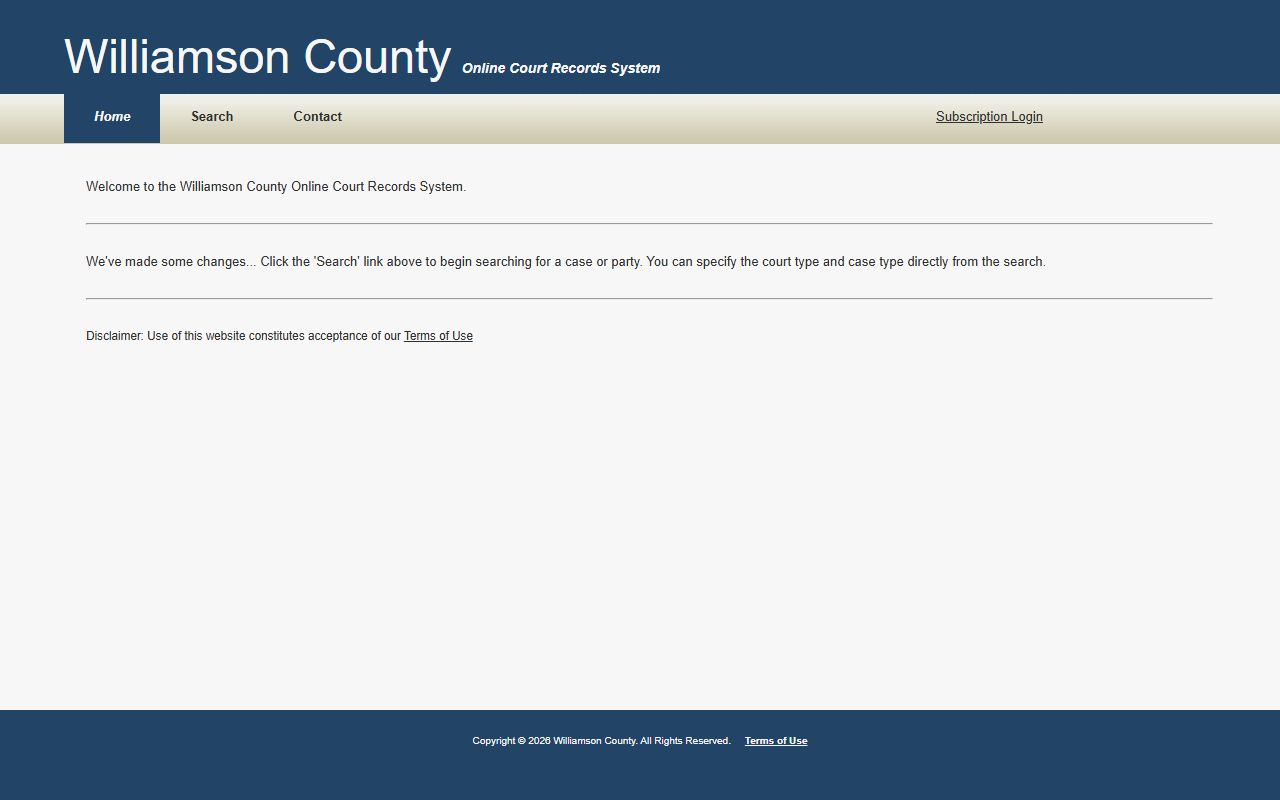
The portal image shows the public search side. It is the best first stop before a courthouse visit.
The county courts page at williamsoncountycourts.org is the useful backup when you need office details or court context.
How to Search Williamson County Felony Records
Start with the full legal name of the person. Add a case number if you have it. A hearing date or year helps too. Williamson County’s portal is built for those details, so the search usually works better when you keep it tight. If the person has a common name, the case number becomes important fast. It keeps the search from drifting into the wrong docket.
If the portal does not give you the full answer, go to the Judicial Center in Franklin. The county research gives you the phone number, fax lines, and mailing address, so you can call ahead if you want to confirm what the office needs. That is useful when you are looking for older files or when the case may move through one of the county’s specialty courts. The clerk office is also the place to ask about copies and certification.
Bring these details when you search Williamson County felony records:
- Full legal name of the person
- Case number, if available
- Hearing date or year
- Court type or recovery court note, if known
Those details make the search easier and help the clerk find the right file faster if you need a copy.
The county courts image is the right local backup when you need court context or office direction.
Williamson County Felony Records Access
Williamson County records include felony criminal cases, misdemeanors, civil cases over $25,000, family court matters, probate, and traffic violations. That wide record set matters because felony work can connect to more than one filing in the same county. The portal can show the public side, while the clerk office can give you the fuller paper record. If you are tracing a case through the county courts, both parts matter.
The county’s recovery courts make Williamson County a little more detailed than a basic court system. Those specialty courts can affect how a case moves and how it appears in the record. The good news is that the portal and courthouse both support public search. That makes it easier to follow a case from start to finish if you know where to look.
Franklin is the county seat, and the Justice Center is the county hub for records access. Since the research does not publish a detailed fee chart, the clerk should confirm copy costs before you request paper records. That keeps the visit efficient and avoids a surprise.
Fees for Williamson County Records
The Williamson County research does not include a local fee chart, so the clerk office should confirm current copy costs before you request paper records. That is the safest move. County fees can change, and certified copies usually cost more than plain copies. If you only need to verify that a case exists, the portal is usually enough and avoids the need for a paper request.
For a broader Tennessee criminal history, the Tennessee Bureau of Investigation charges a $29 background check fee. That is a separate state service and is not the same as a Williamson County court file. It is useful when you need a statewide criminal history instead of one county case. Since the fee is non-refundable, use it only when the county portal is not enough.
County files and state checks do different jobs. Keeping them separate keeps the request cleaner and the result easier to explain.
Williamson County Felony Records Limits
The Tennessee Public Records Act, T.C.A. § 10-7-503 et seq., opens many government records to public inspection, but not every file. Williamson County still has to protect sealed records, redacted fields, and confidential matters. If a file does not appear in the portal, it may be protected rather than missing. That is a normal part of Tennessee record search work.
Records cleared under T.C.A. § 40-32-101 are handled differently. An expunged file will not show in the same way as an open one. If you need help understanding the line between public and protected files, the Tennessee courts website can help with forms and court guidance.
Those limits are part of the system. They keep sensitive records private while leaving the public side of the court file open for normal use.