
Franklin Felony Records Access
Franklin felony records usually start with a city report or a county court file, then move through Williamson County offices. If you need a police report, a court docket, a county case file, or the right office for a records request, Franklin gives you several paths. City offices handle some records, but the felony case itself is usually part of the county court system. That means the best search starts with the office that made the record, then moves to the office that keeps the file. This page brings those pieces together so you can search Franklin with a tighter plan.
Franklin Quick Facts
Franklin Felony Records and City Offices
The Franklin Police Department records line is (615) 791-3234, and the office is located at 900 Columbia Avenue. The research says the department releases police reports with confidential information redacted, and Tennessee citizenship proof is required. That makes the city office useful when you need the report that started the case, not the full felony file. Subpoena requests must be addressed to the Records Custodian c/o Franklin Police Department, which is a good sign that the city treats records requests as a formal process. The city also gives public affairs contact information if you need help finding the right desk.
Franklin’s city recorder is another useful stop. City Recorder Angie Skarp handles records management, agendas, minutes, and public records coordination. The city has an online public record request portal, and Fee Schedule Ordinance 2020-01 sets open records fees. Most city records are available, but active criminal investigations and certain personnel files are excluded. That mix matters when you search Franklin felony records because a city report can exist even when the larger court file lives somewhere else. If the record is a police report, the city may have it. If it is a felony court file, Williamson County is the better place to look.
The Franklin Police Department public records page at franklintn.gov explains the city request path and the proof-of-citizenship rule.
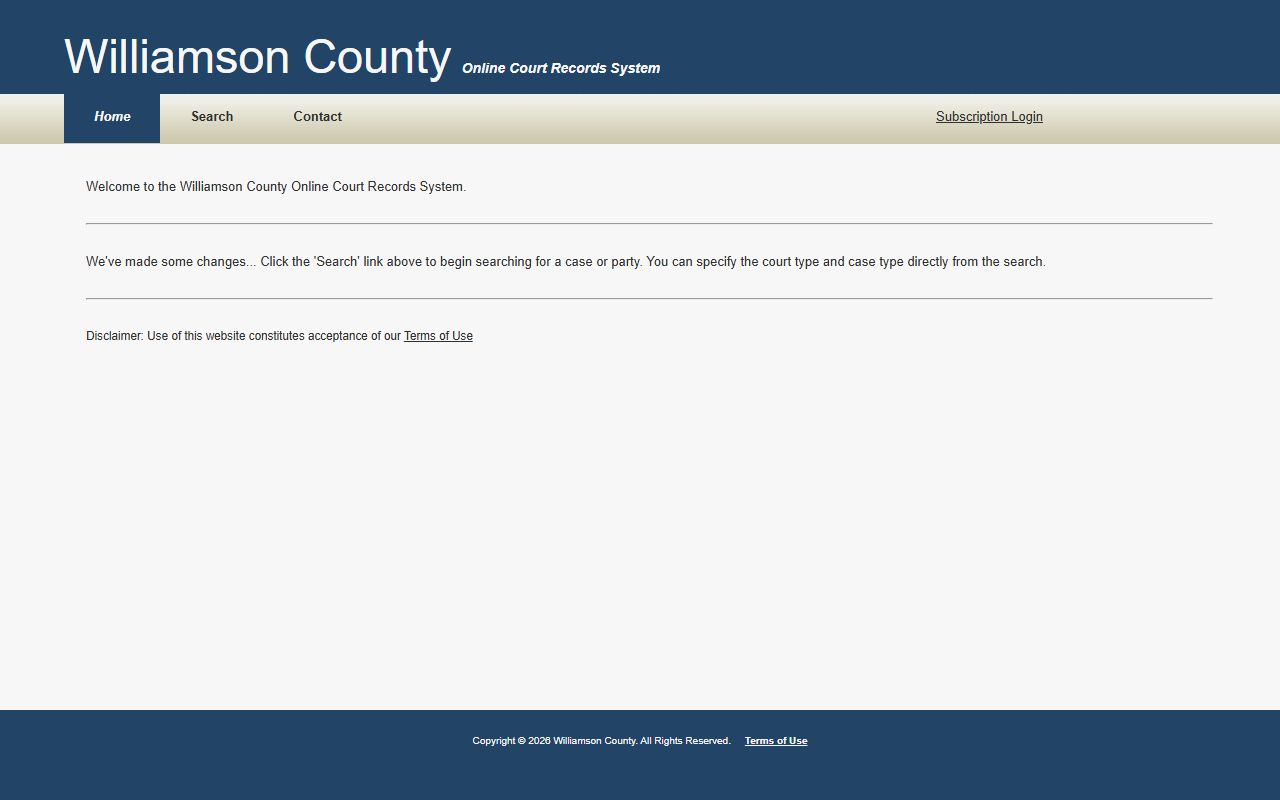
That county-level portal is where the felony case usually becomes easier to trace.
Franklin Felony Records Search
Williamson County is the core search point for Franklin felony records. The county court system is centered at the Justice Center, 135 4th Avenue South in Franklin, and the county uses both williamson.tncrtinfo.com and williamsoncountycourts.org. The Circuit Court Clerk handles felony criminal cases, civil cases over $25,000, family matters, probate, and traffic records. The General Sessions Court is at the same location and can help with criminal and civil dockets. Williamson County also operates recovery courts, which matters when a case includes treatment or supervised alternatives. If you need the actual criminal file, the county court side is usually the right side.
County records also connect to the sheriff’s office. The Williamson County Sheriff records office is at 408 Century Court in Franklin, and it provides incident reports, crash reports, citations, warning documents, local background checks, and fingerprinting. The office accepts cash, cashier checks, and money orders, and it says response time is within 7 business days. Copy fees are 15 cents for black and white pages and 50 cents for color, with labor charged after one hour. That makes the sheriff’s office useful when the search begins with a crash, a citation, or a jail-related record instead of a court filing. For a felony search, those record types often point back to the same case.
The sheriff’s public records page at williamsoncountysherifftn.com is the direct route for reports and related records from the county side.
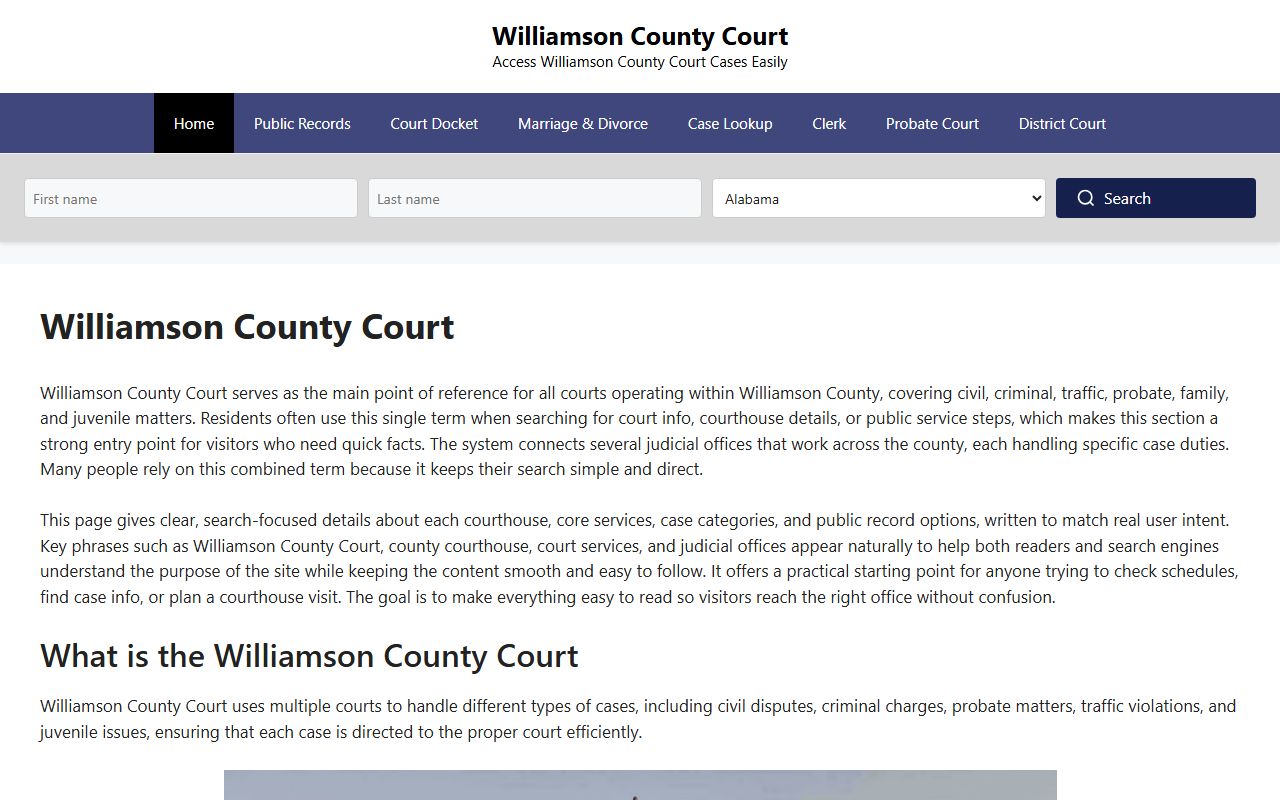
That county court image matches the place where felony dockets and filings usually live.
Franklin Felony Records and Requests
Request rules in Franklin are clearer when you keep city and county records separate. The city police and recorder offices work under Tennessee public records law, and the county offices follow the same law with their own local forms. Under T.C.A. § 10-7-503, public records are generally open unless a specific exemption applies. In Franklin, that means you can ask for city reports, county case files, or sheriff records, but each office can still ask for the details it needs. The city may want a request form and proof of citizenship. The county may want the case name, date range, or office name. The more exact you are, the faster the answer.
Franklin is also a good example of why felony records can be partial. A city office may have an incident report, while the county has the indictment and judgment. The sheriff may have booking or jail-related records. If the case was expunged under T.C.A. § 40-32-101, the public version can shrink or disappear. That does not mean the event never existed. It means the public search result has been limited by law. For a clean records search, treat Franklin as a chain of offices, not a single desk. That is the fastest way to avoid missing a piece of the file.
Note: Franklin requests often move faster when you give the city or county office the exact name, date, and record type instead of a broad description.
What Franklin Felony Records Show
A Franklin felony file may include the arrest report, a booking record, a docket sheet, motions, and the final judgment. A police report can show the first facts. A county court file can show the charge history, hearing dates, and final outcome. If you are tracking a person under supervision, the Tennessee Department of Correction FOIL tool is useful too. FOIL shows photo, current status, facility location, offense details, sentence information, parole hearing status, and release information for offenders under TDOC supervision. That makes it a strong statewide backup when a local Franklin search only answers part of the question.
The Franklin court file and the city report do not always match in size. City records may be redacted. County files may include the full criminal trail. If you need a statewide criminal history instead of a local court file, the Tennessee Bureau of Investigation offers background checks through CJIS for $29, and the request can be made by mail, email, or in person. That is not the same as a Franklin court docket, but it can help when you need a broader criminal history check or want to compare a county file against a state summary. Use both when the record trail is unclear.
The Tennessee Bureau of Investigation background check page at tn.gov is the state backup when Franklin offices only give you part of the record.
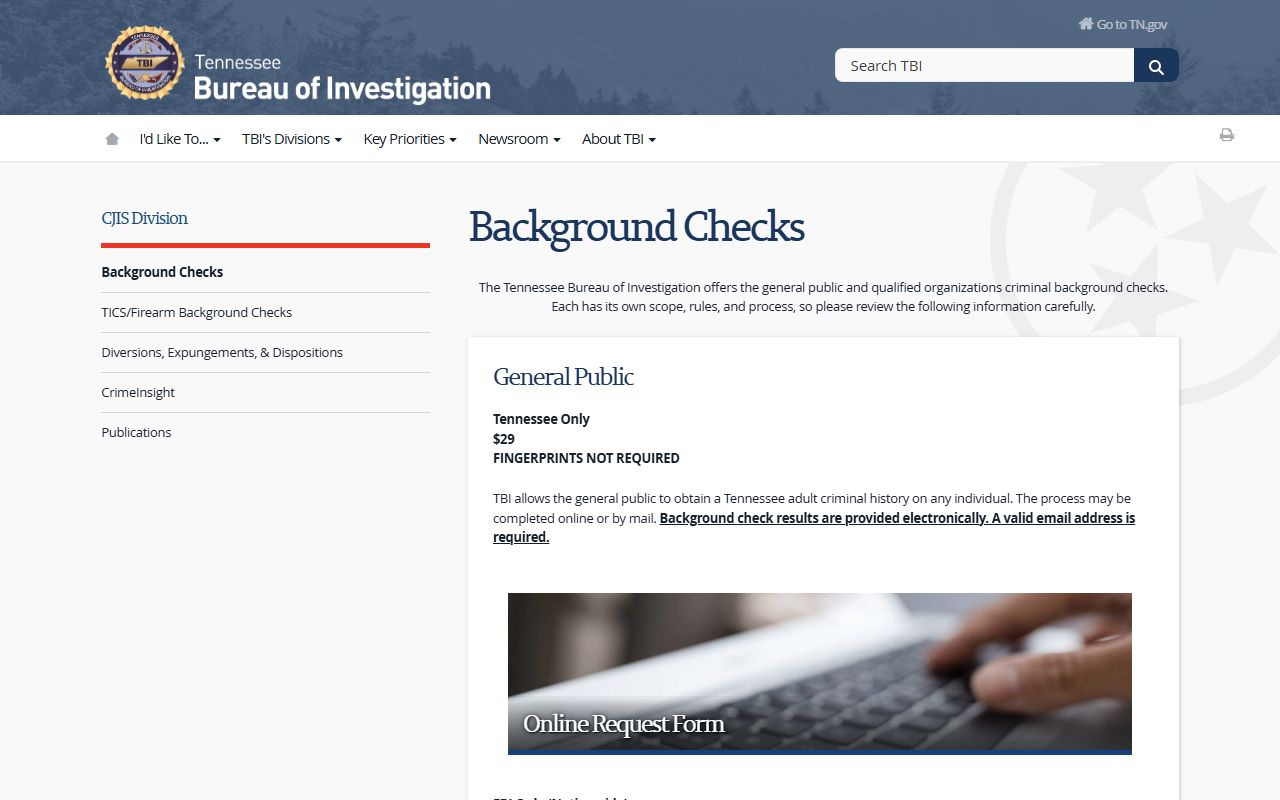
That state image fits the fallback path when a city office only has part of the record.
Franklin Felony Records Help
Tennessee courts and self-help tools can fill in the gaps after you find the first record. The main courts site at tncourts.gov gives you forms, while the Self Help Center helps with practical questions. The expungement page is especially useful if a Franklin felony record has already been cleared or if you want to see whether a past case may qualify. For court history, the appellate case search at pch.tncourts.gov can show higher court activity. These tools do not replace county case files, but they help explain the shape of the record once you have it.
Franklin also sits in a county with enough court activity that you should expect some records to be split. The city may hold the report. The county may hold the docket. The sheriff may hold the jail or incident record. The county courts may hold the final case result. If you search all four together, you are more likely to find the whole story. That is the right approach for anyone trying to search Franklin felony records with real accuracy. The office names matter. The record type matters. The best search starts there.
The Tennessee courts self-help center at tncourts.gov/programs/self-help-center is the best place to check forms, expungement help, and other court guidance after you locate the case.
Note: In Franklin, the city office can explain the report, but Williamson County courts usually hold the felony file itself.
More Franklin Felony Records Sources
The city recorder, police records office, Williamson County courts, and sheriff’s office all serve different parts of the same search. If one office tells you to look elsewhere, follow that pointer. That is normal in Franklin. A police report may live with the city, while the indictment, docket, and judgment live with the county. If you are comparing records, make a note of the office, the request date, and the case number if you have it. That keeps the record trail clean and helps you avoid mixing city files with county filings.
When you are done with the local search, state tools still help. TBI covers criminal history checks, TDOC FOIL covers supervision status, and the Tennessee courts site covers forms and appellate history. Those are the best official backstops if Franklin’s local offices only give you a partial match. Use them as a second layer, not a replacement for the local record. That is the fastest way to search Franklin without losing the local detail that makes the record useful.