
Search Columbia Felony Records
Columbia felony records usually start with a city report, then move into Maury County court files. If you need an incident report, a public records request, a city court entry, or the criminal case itself, the right path depends on the record type. Columbia keeps a strong city records system, but the felony file itself usually lives at the county level. That means the city is best for the first clue and the county is best for the final result. The cleanest search starts with the office that made the record and ends with the office that keeps the court file.
Columbia Quick Facts
Columbia Felony Records and City Offices
The Columbia Police Department Records Division sits at 806 Fairview Avenue and acts as the central repository for offense reports, incident reports, arrest reports, and field reports. That makes it the first stop when a case started with a city call or a local arrest. The research says free crash or incident reports are available if they are under 10 pages, while larger reports can carry charges. Requests can be made by call, fax, or email. Reports under active investigation are held until the case is complete, and completed reports are usually ready in 3 to 5 business days. That is a practical first layer, not the full felony file.
Columbia City Court adds another local layer. Judge Jake Hubbell presides, and the court handles traffic citations, parking tickets, and city ordinance violations. Those matters are part of the city record chain, but they do not replace the county court file when the case becomes a felony. The City Recorder's Office also handles court and citations work, along with business licenses, property tax, and permits. If you are tracing a record, the city court and police records division can help you find the date, the citation number, or the incident report that points you toward the county case.
The Columbia records division page at columbiatn.gov is the direct city source for offense, incident, arrest, and field reports.
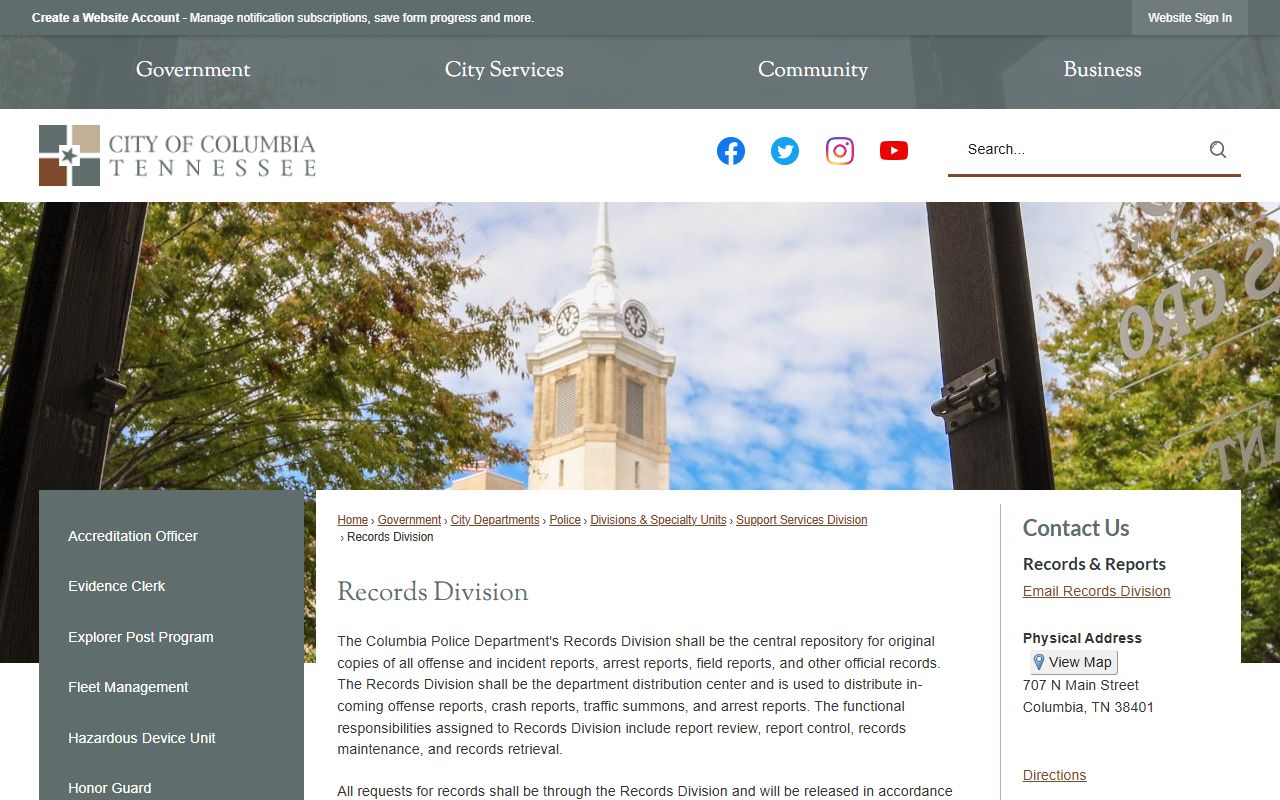
That division is the city office most likely to hold the first report in a Columbia felony trail.
Columbia Felony Records Search
Maury County is the county-level home for Columbia felony records. The county uses maury.tncrtinfo.com for online court records, and the county seat is Columbia itself. The Justice Center houses the Circuit Court, General Sessions Court, and other county court functions. Maury County records can be searched by party name, case number, or hearing date, which makes the portal useful when the city report gives you only a partial clue. The county records cover felony criminal cases, misdemeanors, civil litigation, family court records, probate, and traffic violations. That broader coverage matters because the felony case file is usually the record you need when the city report only tells part of the story.
County contact points matter too. The Maury County Circuit Court Clerk is at 41 Public Square in Columbia, and the Maury County Sheriff's Office is at 1300 Lawson White Drive. The Clerk and Master handles Chancery Court records at the same public square address. Those county offices are where a Columbia felony search usually becomes more complete. If you already have a city report number, the county portal and courthouse can help you follow the rest of the case. If you only have a name, the county portal is still the right place to begin because it lets you search by name and hearing date.
The Maury County records site at mauryrecords.us is another good county-level source when the search needs a broader records view.
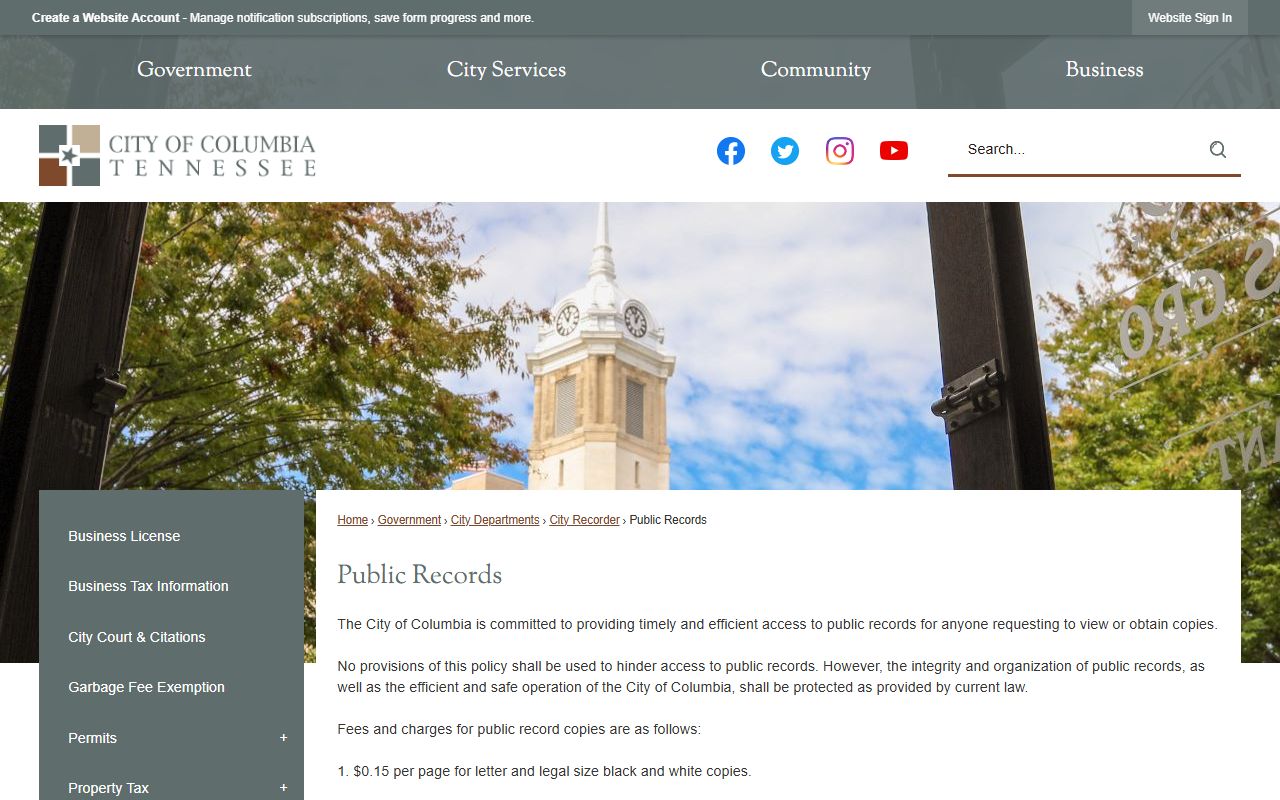
That page shows the city request path for public records that may lead into a felony case search.
Columbia Felony Records Requests
The City of Columbia says it is committed to timely and efficient access to public records. The city fee schedule is clear: 15 cents per page for black and white copies, 50 cents per page for color, actual cost for other media, and labor when time exceeds one hour. Outside vendor costs can apply too. That makes Columbia a strong city for records requests because the rules are spelled out. A Public Records Access Policy and Request Form is available online, and that is often the cleanest way to request a police report or city file. If the record is still under active investigation, the city can withhold it until the case is complete.
Under T.C.A. § 10-7-503, Tennessee records are generally open unless an exemption applies. In Columbia that means the city can still ask for details that help it identify the file, and the county can still require a specific search description. If the record you want is a felony case, the county court portal is usually the better place to look first. If the record you want is the original police report, the city records division is the right stop. The best Columbia searches move in that order: report, court docket, then final judgment.
Note: Columbia requests work best when you separate the city report from the county felony file before you ask for copies.
The Columbia public records page at columbiatn.gov is the right city-side page when you need the policy, the form, or the fee schedule.
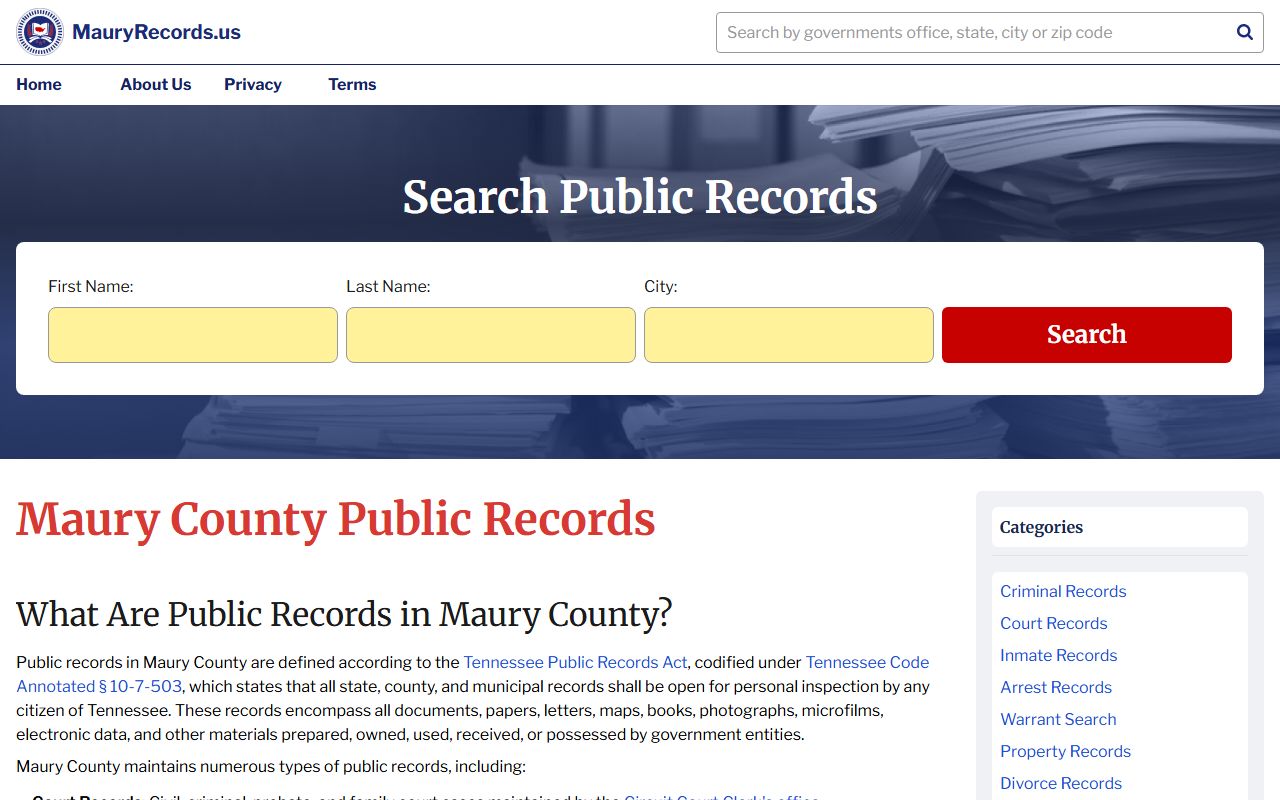
That image matches the county records step that usually follows the city report in Columbia.
What Columbia Felony Records Show
A Columbia felony search can show several record layers. A city report may list the offense summary, the officer notes, and the incident date. A city court record may show traffic or ordinance matters that stayed municipal. A county felony file may add the indictment, hearing dates, motions, and final judgment. Maury County is the place where the criminal case becomes fully visible. That is why a Columbia search should not stop with the police report. The city gives you the starting point, but the county gives you the legal finish line. If you need the actual case result, the county court file is usually what matters most.
State tools can help when the local file is thin. TBI handles statewide criminal history checks, TDOC FOIL can show supervision data, and the Tennessee courts site gives you forms, self-help guidance, and appellate public case history. Those tools do not replace the city report or county docket, but they help explain what happened after the record was created. If a file was expunged, T.C.A. § 40-32-101 can narrow or clear the public version. That is another reason the city and county should be searched together before you assume a case is missing.
The Tennessee Bureau of Investigation background check page at tn.gov is the statewide fallback when Columbia offices only give you part of the record.
Note: Columbia felony records are clearest when you read the city report and the Maury County court file as a pair.
Columbia Felony Records Help
The Tennessee courts site at tncourts.gov is the best state-level backup for forms, self-help guidance, and public case history. If you need an expungement form or want to understand what a docket means, that site is the right place to start. Columbia's city and county record paths are straightforward, but they still split by function. Police keep the report. The city court keeps the ordinance or citation case. Maury County keeps the felony file. Once you know that layout, you can move through the search without wasting time on the wrong office. That is the practical way to work Columbia records.
If the case involved an arrest, the Maury County Sheriff's Office can also matter because it keeps jail and arrest records. Those records can connect the city incident to the county criminal file. When you have a report number, a case number, or even just a date, the city and county records become much easier to line up. The best Columbia searches are small and specific. They use the city records division for the report, the county portal for the felony case, and the state tools only when the file trail needs one more piece.
The Tennessee courts self-help center at tncourts.gov/programs/self-help-center is the right place to check after you locate the Columbia case and need the next step.